Answer: Atmospheric pressure is the pressure exerted by the thick layer of atmosphere enveloping the Earth's surface on the surface itself or objects on it, denoted by the symbol  . Absolute pressure is the pressure directly acting on the surface of a container or an object, with its value measured from absolute vacuum as the starting point, symbolized as
  . Gauge pressure, measured by instruments like pressure gauges, vacuum gauges, and U - tubes, has atmospheric pressure as its reference point and is represented by
  . Understanding the differences between gauge pressure, absolute pressure, and atmospheric pressure is crucial in various fields.
The relationship among these three pressures is 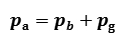 This relationship can be better grasped through real - world applications of gauge pressure, absolute pressure, and atmospheric pressure. For example, in a car tire, the pressure shown on a tire pressure gauge is the gauge pressure. To calculate the absolute pressure inside the tire, you need to add the local atmospheric pressure to the gauge pressure reading.
Pressure is defined as the force per unit area, and its base unit is N/㎡, abbreviated as Pa, named Pascal. In engineering, MPa (megapascal) is commonly used. The conversion between these units is essential for accurate calculations. For instance, knowing the calculation methods of gauge pressure, absolute pressure, and atmospheric pressure in terms of different units helps in various engineering designs.
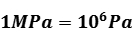
1 standard atmospheric pressure is equal to 0.1013MPa.
 In the old unit system, pressure was often measured in
  (kilogram - force per square centimeter). When dealing with equipment or data from older systems, it's important to be able to convert between the old and new units accurately. This is where understanding how to measure gauge pressure, absolute pressure, and atmospheric pressure accurately becomes significant, as incorrect unit conversions can lead to errors in pressure measurements.
Moreover, understanding the importance of understanding gauge pressure, absolute pressure, and atmospheric pressure cannot be overstated. In the aviation industry, for example, accurate knowledge of these pressures is vital for the safe operation of aircraft. Pilots need to know the atmospheric pressure at different altitudes to calculate the absolute and gauge pressures relevant to the aircraft's systems, such as the tire pressure and the pressure in the fuel lines.


